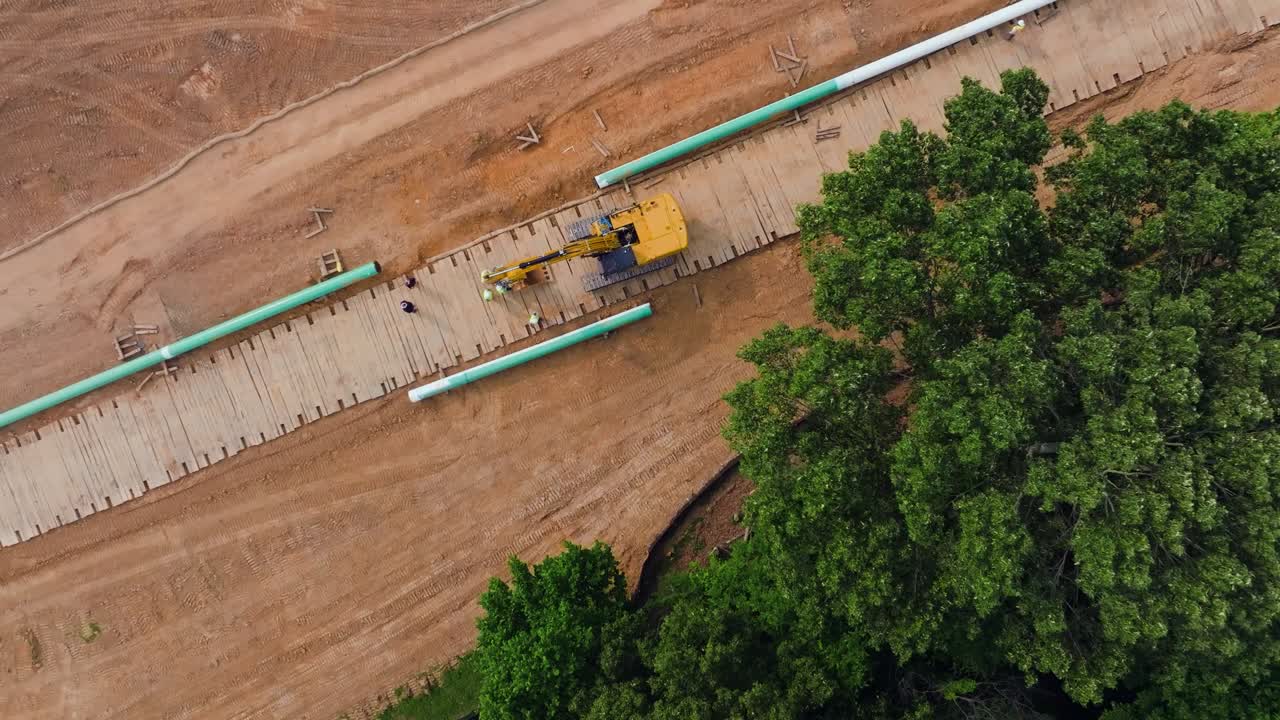
Natural gas pipelines, compression and storage facilities connect domestic supply with power generators, utilities, manufacturers, LNG facilities and communities. As demand grows, the infrastructure connecting supply to customers must keep pace. Industry analysis points to substantial midstream investment needs through 2052 while identifying permitting and construction timelines, constrained gas movement, and pipeline and storage limitations as continuing challenges.
For a major interstate project, the federal process may involve the Federal Energy Regulatory Commission (FERC), the U.S. Army Corps of Engineers, the U.S. Fish and Wildlife Service, state agencies, Tribal consultation and cultural-resource review. The central question is not whether projects should be reviewed. It is whether those reviews can be rigorous, coordinated and completed against clear schedules.
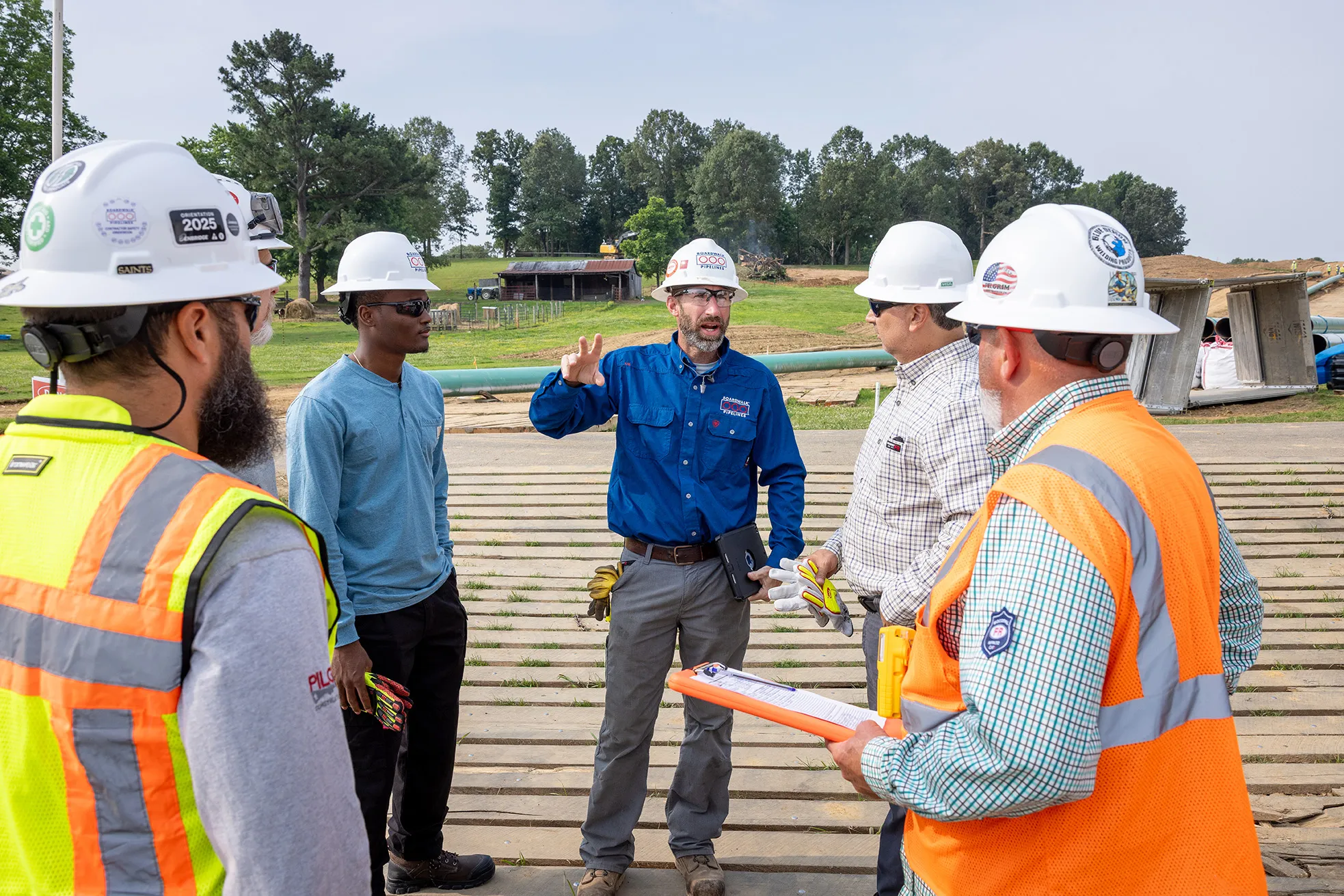
“Permitting reform should be measured by public outcomes. A strong process gives agencies the time and information needed for a thorough review, while giving communities, customers and project developers greater clarity about requirements, schedules and decisions. That kind of certainty supports responsible investment in the infrastructure needed for reliability and growth.”
01
Predictability matters
Large natural gas projects require years of planning, environmental study, engineering, landowner engagement and coordination among agencies. Unclear sequencing, overlapping reviews and shifting schedules can add cost and uncertainty without necessarily improving the quality of the underlying analysis. Trade-industry work reviewed for this article emphasizes durable regulatory certainty because midstream assets are major, long-lived investments.
That is why the current permitting conversation increasingly centers on practical process improvements: one coordinated federal schedule, earlier identification of issues, defined milestones, transparency about progress, and greater certainty once agencies make their decisions. These concepts can support capital planning and project execution while preserving environmental review, public participation and applicable mitigation requirements.
02
A policy foundation built over time
Federal reform has developed incrementally rather than through a single action. The “One Federal Decision” framework introduced a government-wide objective of coordinated environmental reviews and authorization decisions for major infrastructure. Subsequent energy-infrastructure actions focused on clearer timetables and reduced duplication, including attention to Clean Water Act Section 401 reviews. In 2023, Congress amended NEPA to establish statutory deadlines of two years for environmental impact statements and one year for environmental assessments, along with page limits, interagency coordination measures and expanded use of categorical exclusions.
Agency implementation has continued. FERC updated its NEPA procedures and guidance in 2025. FERC has also examined expansion of its blanket-certificate program for qualifying natural gas facilities, a pathway that can be relevant to certain compressor additions, replacements and system upgrades. In 2026, the Army Corps reissued its Nationwide Permits for activities with no more than minimal environmental effects, while wildlife and historic-preservation procedures remained areas of active regulatory development.
03
FAST-41: coordination without eliminating review
FAST-41 is one of the clearest examples of the shift toward coordinated permitting. Enacted in 2015, the program provides eligible infrastructure projects with a coordinated federal permitting timetable, enhanced interagency collaboration and a public dashboard showing major milestones. FAST-41 does not waive NEPA, Clean Water Act, Endangered Species Act, historic-preservation or other applicable requirements. Its value is schedule visibility and accountability across the agencies responsible for those reviews.
“FAST-41 provides a transparent way for federal agencies to align their existing permit-review processes. For Kosciusko Junction, that coordination created a visible pathway through comprehensive federal review while preserving the environmental analysis, public engagement and agency responsibilities that apply to the project.”
04
Kosciusko Junction: a real-world proof point
Kosciusko Junction demonstrates how coordinated review can work on a major natural gas infrastructure project. Boardwalk’s project entered FAST-41 with FERC as the lead agency and participation from other federal agencies, including the Army Corps and Fish and Wildlife Service. FERC issued a draft Environmental Impact Statement on April 1, 2026, a final EIS on July 24, 2026, and an order authorizing the project on September 10, 2026, subject to environmental conditions.
- April 1, 2026Draft Environmental Impact Statement
- July 24, 2026Final Environmental Impact Statement
- September 10, 2026FERC order authorizing the project
The result is not an abbreviated review. It is a documented sequence of review, public input, environmental analysis and decision-making managed through a visible federal timetable. That distinction is essential: a predictable process can be both efficient and comprehensive.
05
Responsible development still begins with communities
Permitting reform should not be framed as a choice between infrastructure development and environmental responsibility. Successful projects require both. Environmental reviews identify potential impacts and mitigation measures. Public participation gives landowners, communities, agencies and other stakeholders opportunities to provide information and raise concerns. Wildlife, water, wetlands and cultural-resource reviews remain part of the federal process where applicable.
For Boardwalk, that means pairing regulatory coordination with early engagement, careful route development and responsible execution. The company’s project messaging emphasizes that interstate pipeline review is highly structured, includes extensive public notification and provides multiple opportunities for community and landowner input. That work continues from early planning through construction and restoration.
06
Permitting reform timeline
| Year | Milestone | Why it matters for natural gas infrastructure |
|---|---|---|
| 2015 | FAST-41 enacted | Established coordinated timetables, interagency accountability and a public dashboard for eligible projects. |
| 2017 | One Federal Decision | Advanced the concept of a single coordinated federal review schedule for major infrastructure. |
| 2018 | Federal implementation framework | Eleven agencies and the Permitting Council established an implementation structure for coordinated reviews. |
| 2019 | Energy-infrastructure permitting action | Focused on efficient permitting, clear timetables and Clean Water Act Section 401 implementation. |
| 2020 | Government-wide NEPA rule update | Modernized NEPA procedures and reinforced schedule and coordination concepts. |
| 2023 | Fiscal Responsibility Act NEPA amendments | Set statutory targets of two years for an EIS and one year for an EA, with coordination and page-limit reforms. |
| 2025 | Updated agency NEPA procedures | FERC and other agencies revised procedures and guidance to reflect statutory and judicial developments. |
| 2025 | FERC natural gas process changes | Temporarily raised qualifying blanket-certificate cost limits and began considering permanent modernization. |
| 2026 | FERC blanket-authorization proposal | Proposed expanding the types and scale of qualifying gas facilities eligible for streamlined authorization. |
| 2026 | USACE Nationwide Permits reissued | Continued a streamlined pathway for qualifying activities with minimal aquatic impacts. |
| 2026 | Wildlife and cultural-review developments | ESA rules were revised and Section 106 modernization remained under consideration. |
| 2026 | Bipartisan legislative proposals | Congress continued considering NEPA, Clean Water Act, judicial-review and permit-certainty reforms. |
07
The takeaway
Permitting reform is not about eliminating review. It is about making multi-agency review more coordinated, visible and predictable. For natural gas pipelines, storage and compression infrastructure, a clearer process can support responsible investment and timely execution while maintaining the environmental analysis, public engagement and permit conditions that protect communities and resources.
As infrastructure needs grow, the durable measure of reform will be whether responsible projects can move from application to decision with clarity, certainty and accountability.